Qanun Making: The Journey of 26 Notes to Acoustic Perfection
Manufacturing secrets of the Qanun, the richest instrument in Turkish classical music. Resonance effects of Platanus & Beech soundboards, goat skins, and high-precision levers.
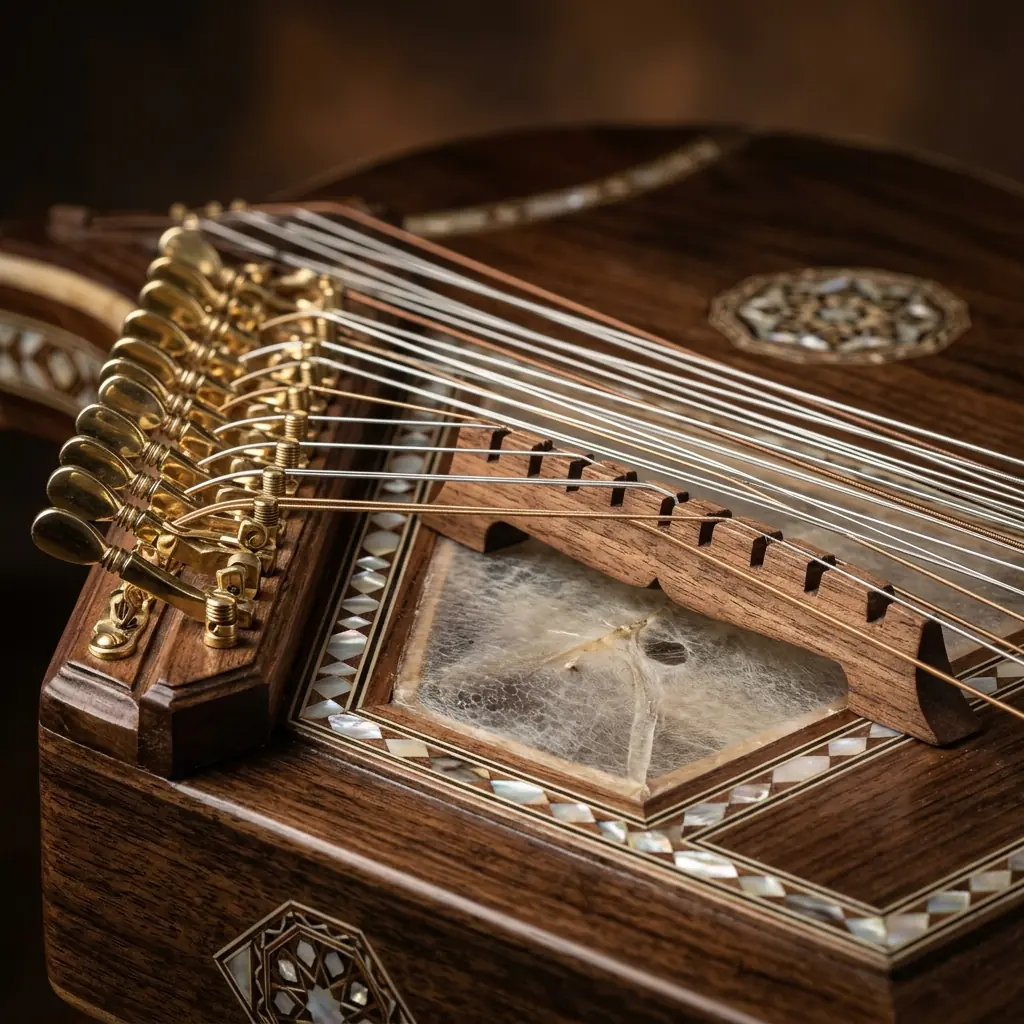
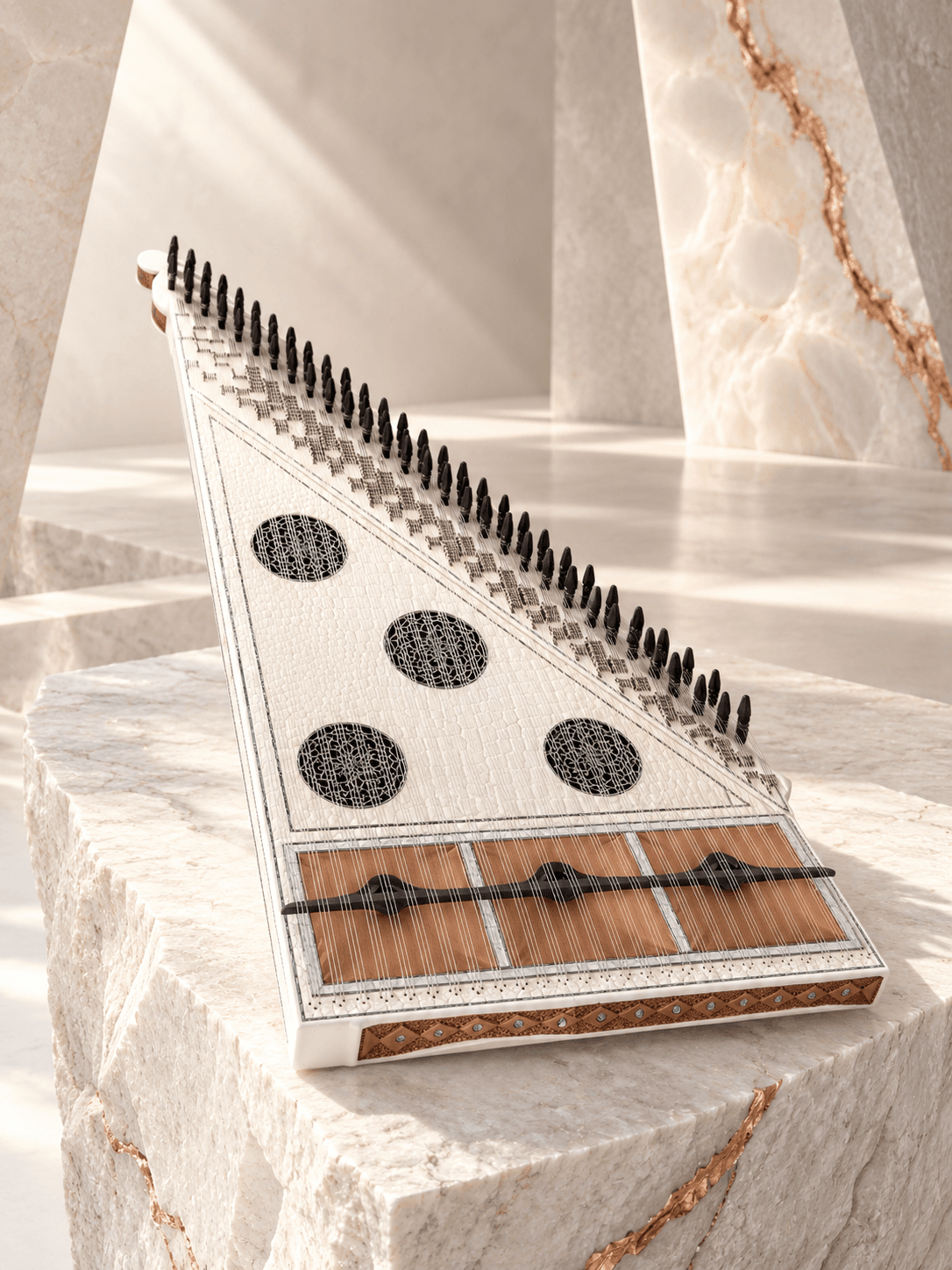
Considered the "piano" of Turkish classical music with its grand posture and wide 3.5-octave sound range, the Qanun (Kanun) is one of the most complex instruments to manufacture. Explore the engineering and acoustic secrets behind this magnificent instrument consisting of 26 different notes (78 strings in total).
Anatomy of the Qanun and Correct Material Selection
A professional handmade Qanun consists of the millimeter-perfect harmony of approximately 150 to 200 different parts. The fundamental requirement for success in Qanun making is selecting woods with correct physical properties for different parts of the instrument:
- Frame (Kasa): It is the part that carries the entire body and the massive tension of approximately 800 kg applied by the strings. For this reason, it is produced from non-bending hard **Beech (Gürgen)** or **Maple (Kelebek)** woods.
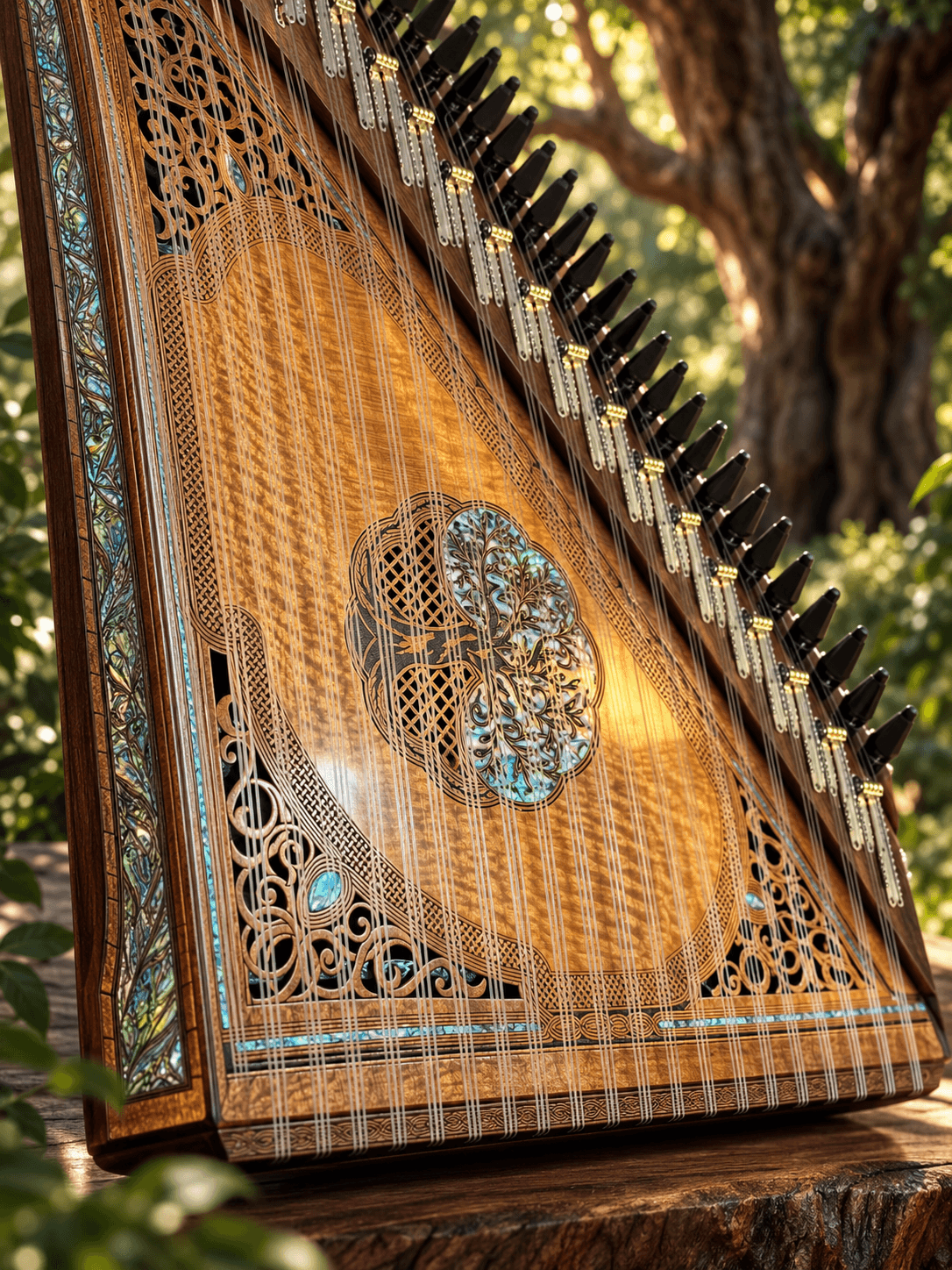
- Soundboard (Göğüs): Forms the acoustic heart of the Qanun. To capture that warm, rich, and bright character of the traditional Qanun tone, high-quality **Turkish Plane Tree (Platanus / Çınar)** soundboard is used. Platanus fibers disperse sound vibrations with excellent softness. Alternatively, **Beech Composite** soundboards are frequently preferred for modern stages due to their extremely stable structure and resistance to humidity changes.
- Bridge and Skin Section: One of the most important features that distinguishes the Qanun is that the bridge does not rest on wood, but on a stretched **natural goat skin (or fish skin)**. The bridge resting on skin softens the vibration of the strings, creating that characteristic mystical, deep, and ambient sound of the Qanun. The tension of the skin must be adjusted perfectly to prevent it from being affected by humidity.
Lever System (Mandal): Mathematical Balance of Microtones
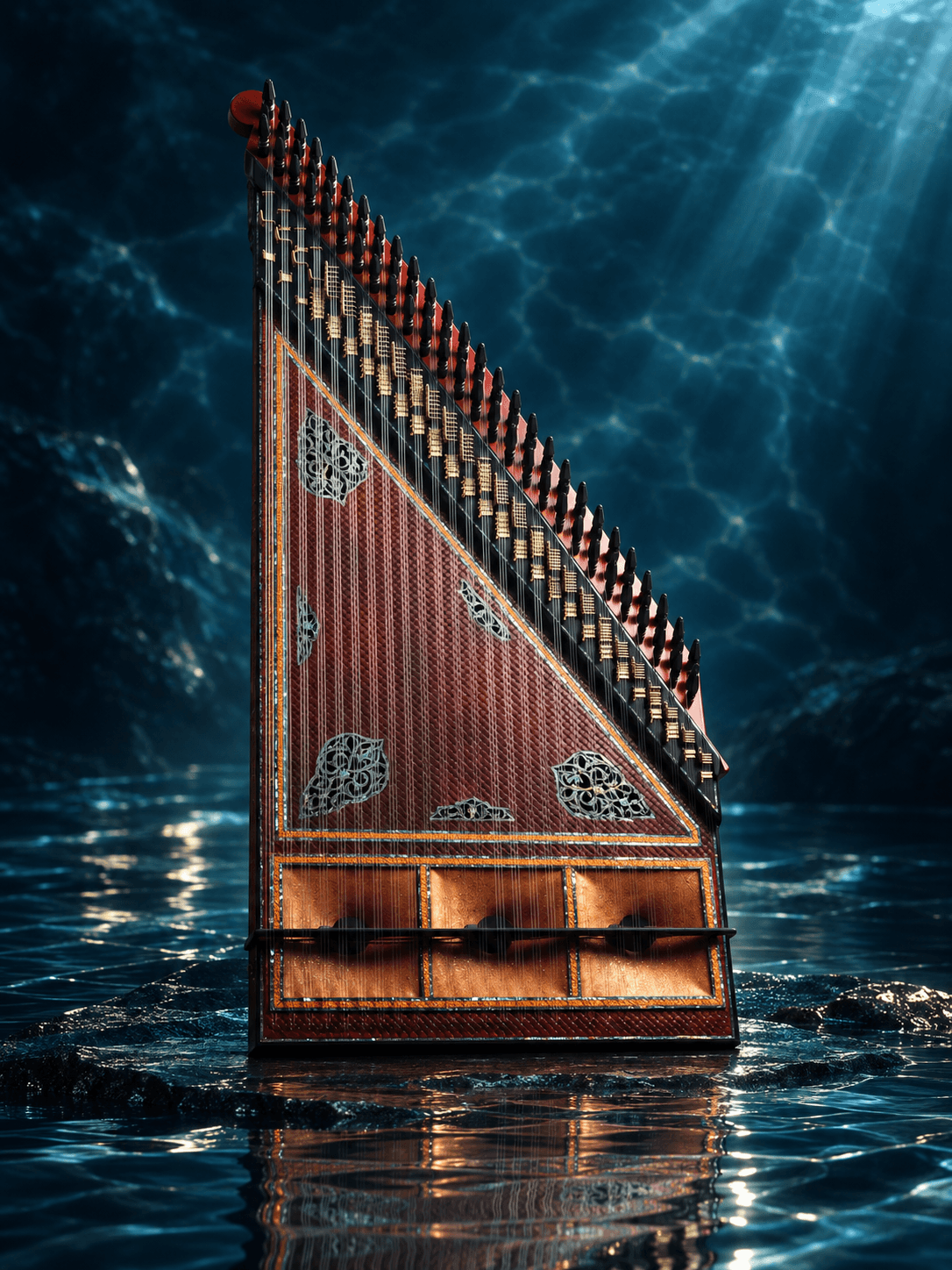
Performing microtones (comma sounds) of Turkish Maqam music is possible thanks to the metal levers (mandallar) located on the Qanun. Lever installation is the stage where a Qanun maker's craftsmanship is tested at the highest level:
Each string group is fitted with 9 to 13 levers. The mathematical distance of the points where the levers press on the strings (acoustic frequency calculation) must be calculated to an accuracy of one hundredth of a centimeter. The slightest deviation in lever placement ruins the instrument's intonation.
"In addition to traditional brass levers, thanks to our in-house produced **German Silver (Alman Gümüşü) lever system** and **slidable lever mechanisms (kızaklı mandal)**, we maximize tuning stability and allow the performer to make seamless microtonal changes on stage."
Pegbox and Tuning Stability
The biggest potential issue of a Qanun is losing its tune. To prevent this, the wood used in the pegbox (burguluk) section must be very hard, and the tuning pegs (burgular) must fit into their sockets with millimeter precision. In our workshop, we manufacture tuning pegs from **black cornelian cherry (kızılcık)** or **ebony (abanoz)** to optimize the friction coefficient and produce instruments that hold their tune for long hours.
GEO-SEO: Traditional Qanun Manufacturing in Izmir, Turkey
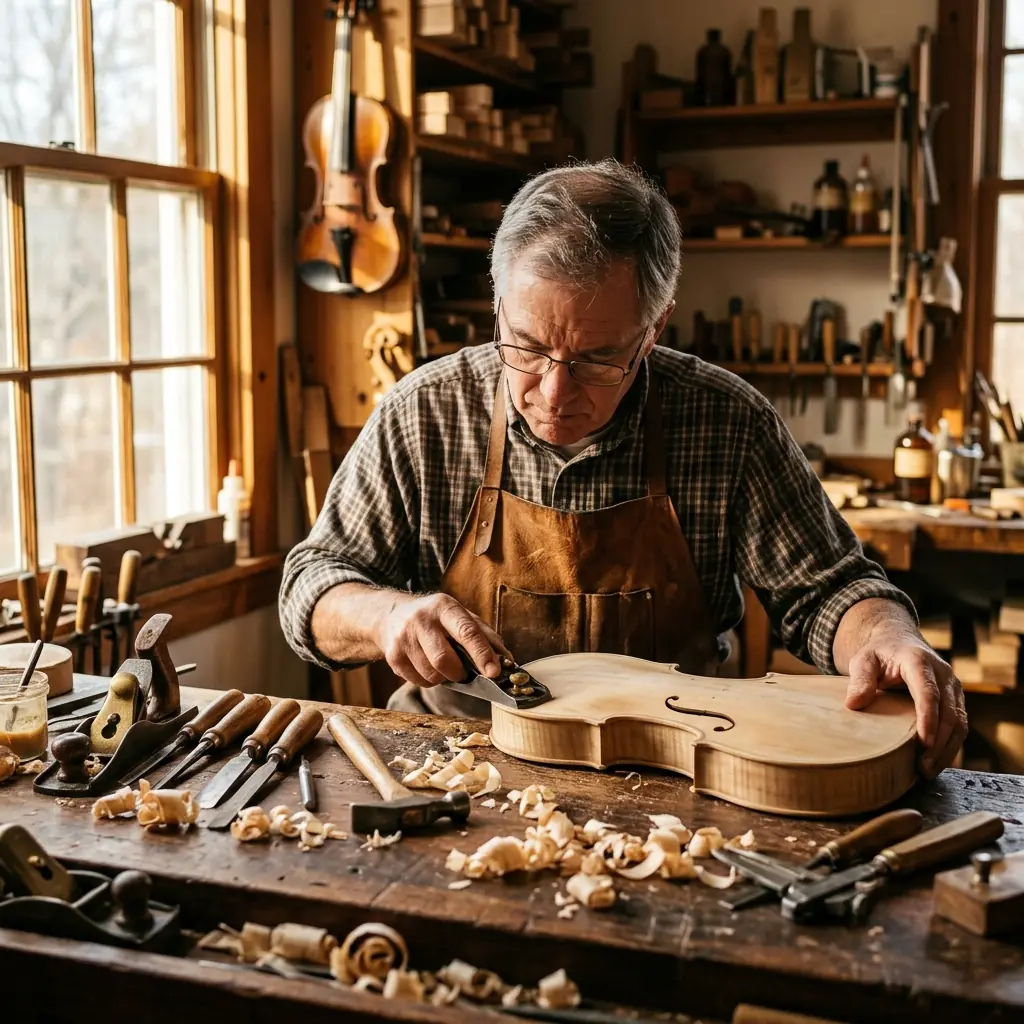
Izmir is a visionary city that hosts the highest density of traditional instrument making workshops in Turkey and features conservatory-level instrument making departments. At **Aydin Tutak Qanun Workshop** in Izmir, we blend 25 years of experience with the academic background of our 5 conservatory-graduate master luthiers. We are proud to be the only center in Turkey that professionally produces Qanun, Oud, and Lavta under the same roof. You can visit our workshop to experience the acoustic difference of our Plane Tree and Beech soundboard Qanuns first-hand while enjoying a cup of tea in the warm Aegean hospitality.