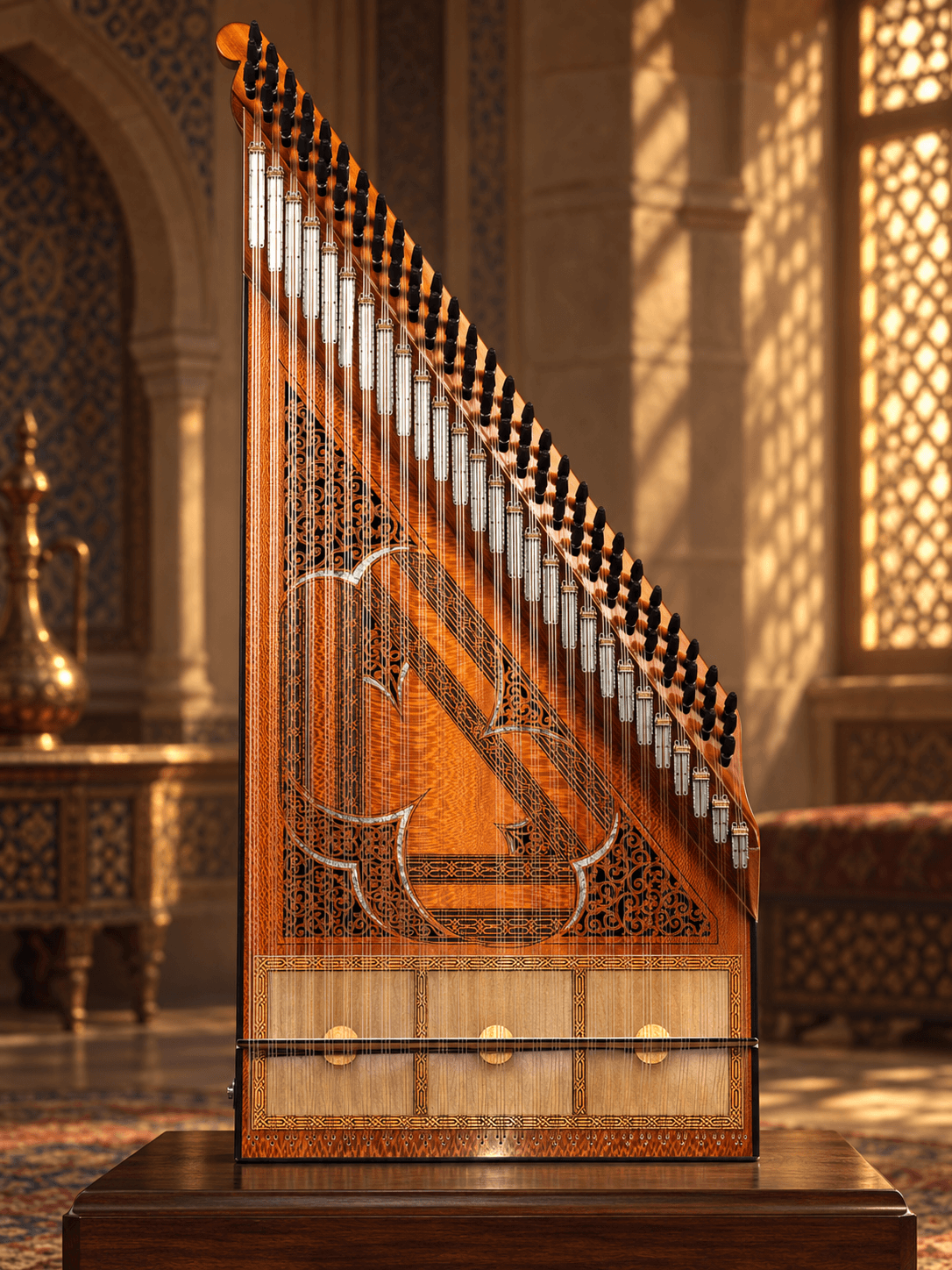
Sliding Lever System: Tuning Revolution in New Generation Qanuns
The effects of the sliding lever system, which replaces traditional peg-mounted levers in classic Qanun making, on tuning stability and microtonal precision.

In traditional Qanun making, every microtonal lever (mandal) is nailed individually to the frame. However, modern stage needs and high expectations of intonation have brought a revolutionary innovation in instrument making: the Sliding Lever System (Kızaklı Mandal).
How Does the Sliding Lever System Work?
In the sliding lever system, the levers are not nailed directly to the soundboard but mounted on millimeter-precise tracks made of stainless steel or German silver. Thanks to this structure, the performer or luthier can slide the levers back and forth to adjust microtonal commas with micron-level precision without causing physical damage to the wood.
Why Choose Sliding Levers?
- Perfect Tuning Stability: While traditional nailed levers can loosen over time, the sliding rail system absorbs string tension perfectly and maintains tune for a long time.
- Zero Wood Wear: To adjust the microtonal interval, you don't need to pull out and re-nail the lever. You simply loosen the micro-screws on the rail and slide the lever in seconds.
- Customizable Microtones: Performers can easily customize the microtonal comma spacing to match different music theories or personal stylistic needs.
In our Aydin Tutak workshop, we offer the sliding lever system as standard or optional on our high-end sycamore qanuns (CE, TOL, and Retro series), providing unmatched comfort for concert performers.