Oud Fretboard Setup and Intonation: Physical Rules of Makam Precision
Ways to achieve perfect intonation on the fretless Oud. The effects of fingerboard curvature, nut/saddle heights, and neck angle on resonance.
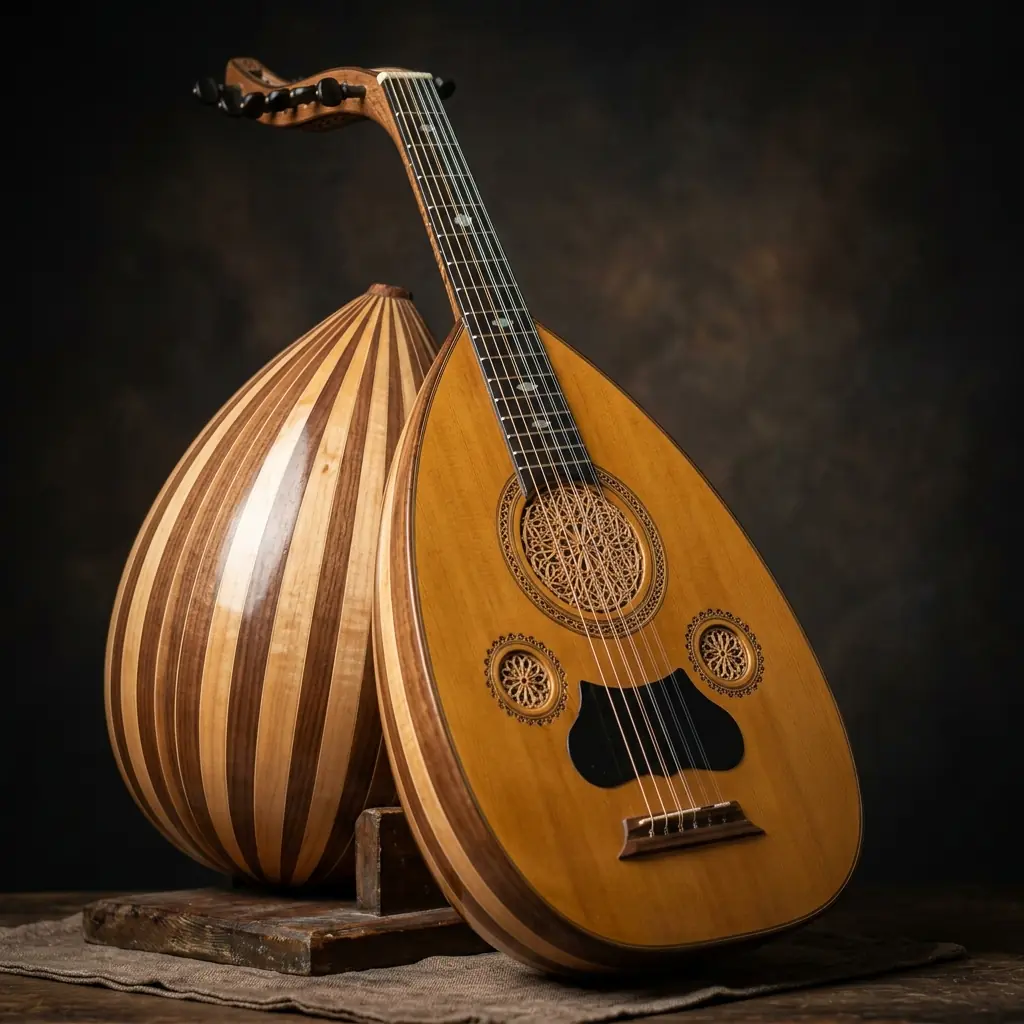
Due to its fretless neck, the Oud offers the performer limitless microtonal freedom. However, this makes the intonation (pitch accuracy) of the instrument much more critical. Capturing a perfect sound on the Oud depends on millimeter-precise physical parameters.
Fingerboard Curvature (Radius) and Wood Selection
To prevent string buzzing and ensure that the fingers glide smoothly over the fingerboard, the keyboard surface must be slightly convex rather than flat. Additionally, to withstand the constant wear of string friction, the fingerboard must be made from high-density hardwoods like **Ebony (Abanoz)** or **Rosewood (Gül)**.
Neck Angle and Action Heights
The angle at which the neck connects to the body determines the string height (action) over the fingerboard. On an ideal Oud, the distance from the strings to the fingerboard should be:
- 1.0 mm at the nut (neck joint)
- 3.5 - 4.0 mm at the end of the fingerboard (body joint)
Any heights outside this range either make the instrument extremely stiff to play or cause the pitch frequency (intonation) to deviate. At our Aydin Tutak workshop, we set the neck angle of every professional Oud using laser-assisted precision and tactile mastery to guarantee flawless intonation.