Oud Making: Secrets of the Deep and Warm Mediterranean Timbres
Manufacturing secrets of the Oud, considered the king of Eastern instruments. The effects of bowl structure, soundboard bracing design, and fingerboard ergonomics on sound.
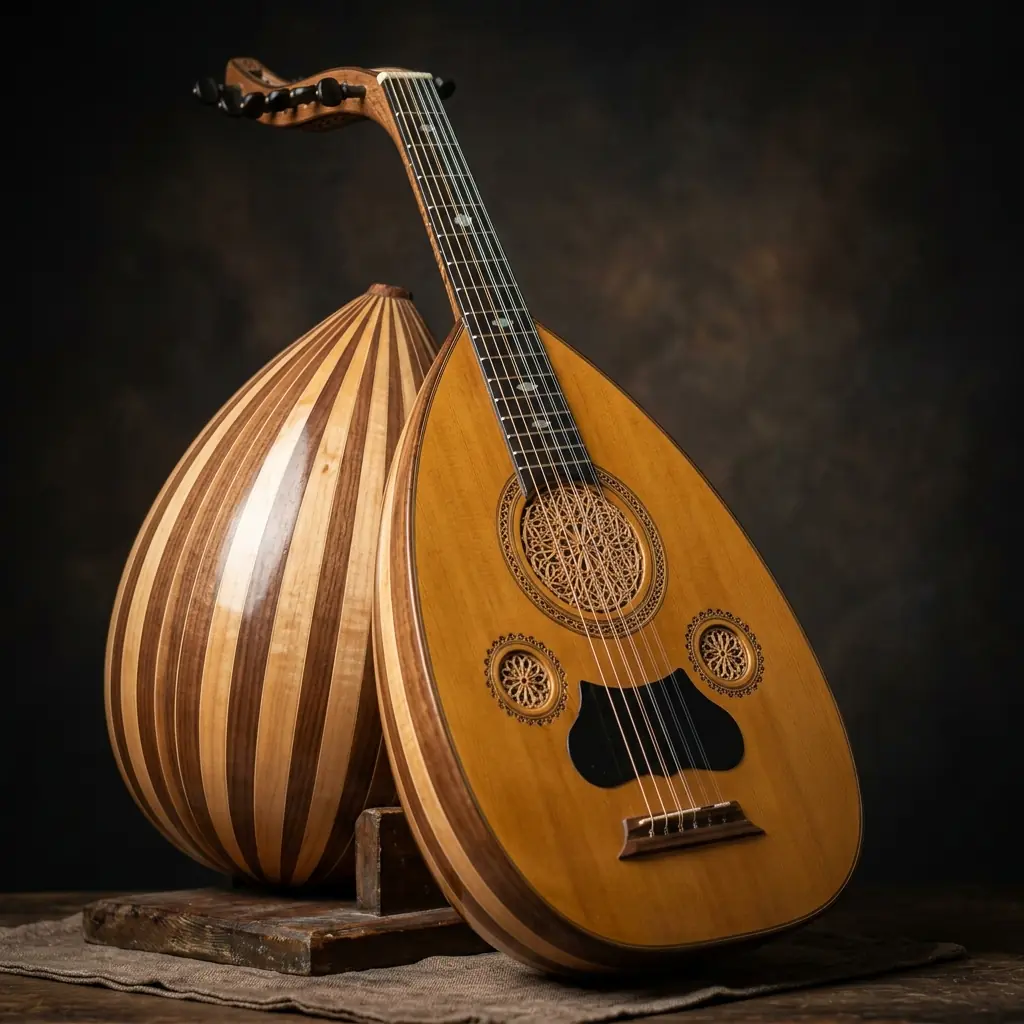
As the most fundamental instrument of Classical Turkish and Arabic music, the source of inspiration for poets, and the king of stringed instruments, the Oud has a mesmerizing sound with rich acoustic depth. We explain the oud making techniques and hidden acoustic formulas that create this deep and warm Mediterranean timbre.
The Body of the Oud: Construction of the Bowl (Tekne)
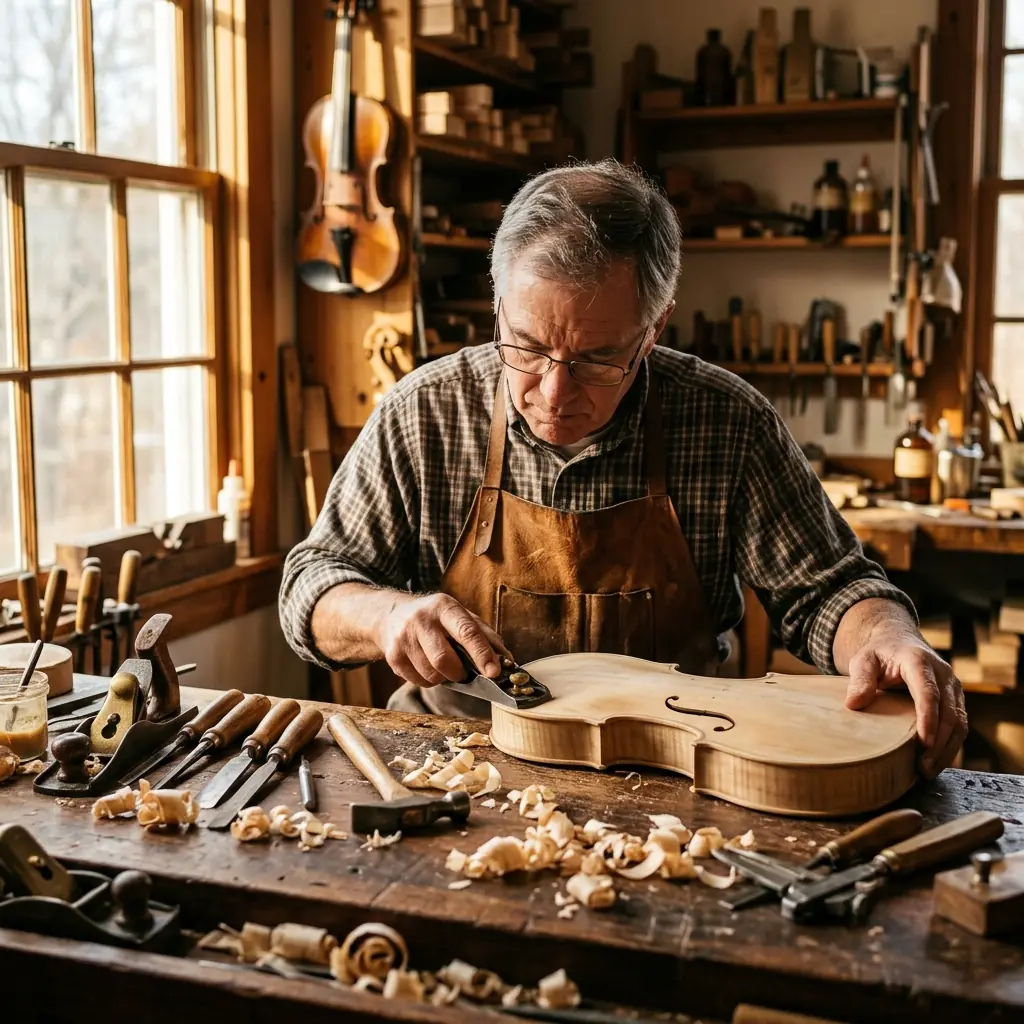
The unique pear-shaped semi-spherical body of the Oud is called the "Bowl" (Tekne) in the lutherie world. Bowl construction is carried out by assembling wooden ribs (yapraklar), which are bent under steam at high temperature, side by side on a special mold:
- Wood Combinations: To color the resonance dispersion in the oud bowl, two different wood species are usually arranged alternately. The deep bass tones of **Dark Walnut (Ceviz)** are balanced with the bright treble character of **Light Maple (Kelebek)** or **Cherry (Kiraz)**. In addition, **Mahogany (Maun)** and **Wenge (Venge)** woods are also frequently used together to obtain strong, concert-grade projection.
- Number of Ribs: A professional Oud usually uses 19 to 23 ribs. The assembly angle of the ribs and the thin mother-of-pearl or wooden purfling strips between them allow the body to perfectly fulfill its function as an acoustic resonance chamber.
Soundboard and Bracing (Balkon) System
The most critical component that determines the sound power and tonal color of the Oud is the soundboard (göğüs). Only highly close-grained, defect-free **German Spruce (Alman Ladini)** or **Western Red Cedar (Kanada Sediri)** is preferred for the soundboard. The thickness of the spruce top is shaved by hand to between 1.8 mm and 2.2 mm from the edges towards the center.
The placement of the internal wooden braces (balkon) located just beneath the soundboard is the area where the oud maker creates their own signature sound. The braces:
- Balance the vertical pressure applied by the strings on the soundboard and prevent it from collapsing.
- Direct the sound waves inside the body of the Oud, ensuring balanced distribution of bass and treble frequencies.
- Our **Traditional Turkish Bracing Placement** applied in our workshop perfectly reveals that highly sought-after mystical, deep, and warm Mediterranean timbre of the instrument.
Keyboard Ergonomics and Action Height
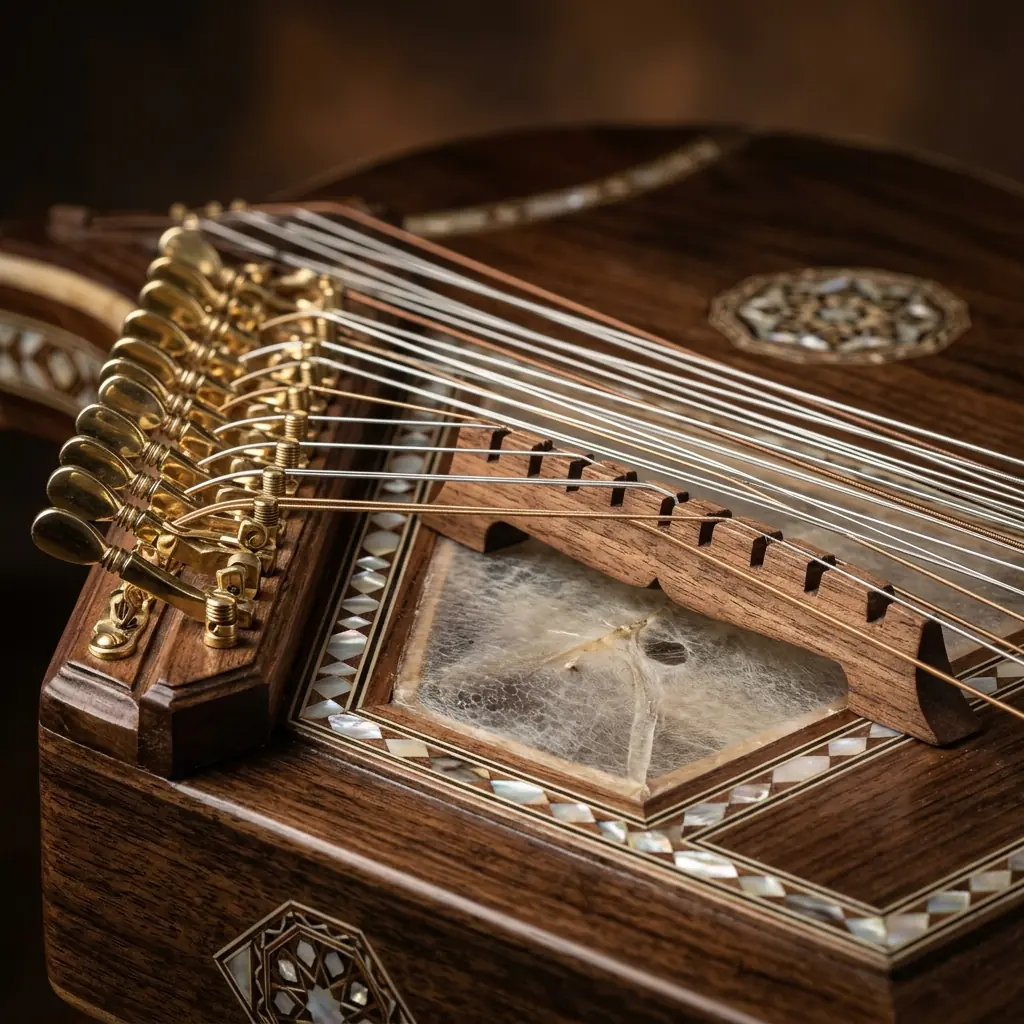
It is not enough for an Oud to have perfect sound; it must also have a keyboard (sap) ergonomics that will not tire the performer's fingers and can be played easily even in high positions. The angle at which the neck connects to the body (approximately 1.5 - 2 degrees) determines the height of the strings from the keyboard (action). Extremely hard and smooth woods like **Ebony (Abanoz)** are used to prevent wear. Rounded keyboard edges and precise nut heights make playing extremely smooth.
Izmir Oud Workshop: Address of Acoustic Craftsmanship in Turkey
When the breeze of the Aegean combines with Izmir's love for art, a perfect atmosphere for oud making emerges. At our spacious production facility in Izmir, Turkey, we produce handmade professional ouds and lutes with the exact same acoustic precision as our Qanuns. All oud woods used in our workshop have been aged for at least 7 years in Izmir's humidity-controlled warehouses to ensure structural stability. We invite you to visit our workshop in Izmir to listen to the unique timbre of walnut, mahogany, and maple woods in person.